
Hanuman Chalisa Meaning in English
The Hanuman Chalisa is a 40-verse hymn composed by Tulsidas in praise of Lord Hanuman. Many devotees chant it daily without knowing the exact meaning of each verse. Below is a clear, verse-by-verse explanation of what each line means, so you can understand the devotion, symbolism, and stories behind the words as you recite them. If you’re looking for the plain chalisa to read or chant along with, see the full Hanuman Chalisa in English.
Doha
Shri guru charan saroj raj neej manu mukur sudhari ।
Baranau raghubar bimal jasu jo dayaku phal chari ॥
Meaning: Cleansing the mirror of my mind with the dust of my Guru’s lotus feet, I describe the pure glory of Lord Rama, which bestows the four fruits of life, righteousness, wealth, desire, and liberation.
Buddhi heen tanu janike sumero pavan kumar ।
Bal buddhi Vidya dehu mohi harau kales Vikar ॥
Meaning: Knowing my body and intellect to be weak, I remember you, O Son of the Wind. Grant me strength, wisdom, and knowledge, and remove my sorrows and faults.
Chaupai
Jai Hanuman gyan gun sagar ।
Jai kapis tihu lok ujagar ॥
Meaning: Victory to Hanuman, ocean of wisdom and virtue. Victory to the King of Monkeys, who illuminates the three worlds.
Ram doot atulit bal dhama ।
Anjaani-putra pavan sut nama ॥
Meaning: You are Rama’s messenger, an abode of immeasurable strength, known as the son of Anjani and the Son of the Wind.
Mahabir bikram Bajrangi ।
Kumati nivar sumati ke sangi ॥
Meaning: You are the great hero, mighty as a thunderbolt. You dispel evil thoughts and stay close to those with good sense.
Kanchan baran biraj subesa ।
Kanan kundal kunchit kesa ॥
Meaning: Your complexion shines golden, adorned with fine clothes, earrings, and curly hair.
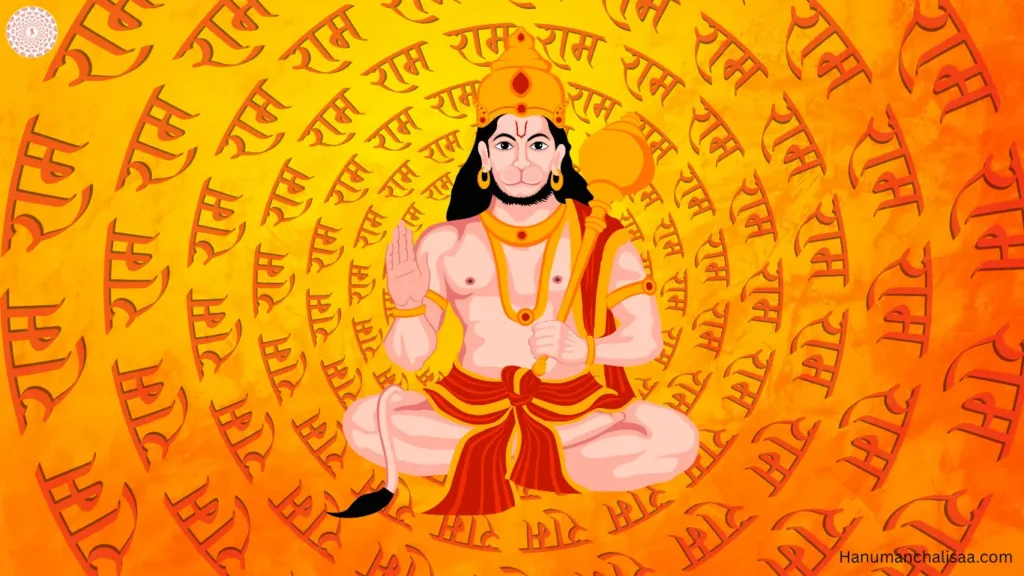
Haath bajra aur dhvaja biraaje ।
Kaandhe munj janeu saaje ॥
Meaning: You hold a mace and a flag in your hands, and wear the sacred thread across your shoulder.
Sankar suvan Kesari nandan ।
Tej pratap mahaa jag bandan ॥
Meaning: You are the manifestation of Shiva and the son of Kesari, worshipped throughout the world for your glory and power.
Vidyavaan guni ati chaatur ।
Raam kaaj karibe ko aatur ॥
Meaning: You are learned, virtuous, and extremely clever, always eager to accomplish Lord Rama’s tasks.
Prabhu charitra sunibe-ko rasiyaa ।
Raam Lakhan Sitaa man basiyaa ॥
Meaning: You delight in listening to the deeds of the Lord, and Rama, Lakshman, and Sita reside in your heart.
Sukshma roop dhari Siyahi dikhavaa ।
Bikat roop dhari Lank jaravaa ॥
Meaning: You took a tiny form to appear before Sita, and a fearsome form to burn down Lanka.
Bhim roop dhari asur sahaare ।
Raamachandra ke kaj savaare ॥
Meaning: Taking a mighty form, you destroyed the demons and accomplished Lord Ramchandra’s tasks.
Laaye sanjivan Lakhan jiyaye ।
Shri Raghuvir harashi ur laaye ॥
Meaning: You brought the sanjivani herb to revive Lakshman, and Lord Rama embraced you joyfully.
Raghupati kinhi bahut badhayi ।
Tum mam priye Bharat-hi-sam bhaayi ॥
Meaning: Lord Rama praised you greatly, saying, “You are as dear to me as my brother Bharat.”
Sahas badan tumharo jas gaave ।
Asa-kahi Shripati kantha lagaave ॥
Meaning: “May the thousand-headed serpent Sheshnag sing your glory,” said Lord Rama as he embraced you.
Sankaa-dik brahmadi munisaa ।
Narad-sarad sahit ahisaa ॥
Meaning: Sanaka and other sages, Brahma and other gods, Narada, Saraswati, and the serpent king all sing your praises.
Jam Kuber digpaal jahaa te ।
Kabi Kovid kahi sake kahan te ॥
Meaning: Yama, Kubera, and the guardians of the directions, along with poets and scholars, are unable to fully describe your glory.
Tum upkar Sugreevahi keenhaa ।
Raam milaye rajpad deenhaa ॥
Meaning: You did a great favor to Sugriva by introducing him to Rama, helping him regain his kingdom.
Tumharo mantra Vibhishan maanaa ।
Lankeshvar bhaye sab jag janaa ॥
Meaning: Vibhishan accepted your counsel and became the King of Lanka, as the whole world knows.
Yug sahastra jojan par bhanu ।
Leelyo tahi madhur phal janu ॥
Meaning: The sun, thousands of yojanas away, you swallowed thinking it a sweet fruit.
Prabhu mudrikaa meli mukh maahi ।
Jaladhi langhi gaye achraj naahi ॥
Meaning: Holding Lord Rama’s ring in your mouth, you leapt across the ocean, no wonder at all for you.
Durgaam kaj jagat ke jete ।
Sugam anugraha tumhre tete ॥
Meaning: All the difficult tasks in this world become easy by your grace.
Ram duwaare tum rakhvare ।
Hota na aagyaa binu paisaare ॥
Meaning: You are the guardian at Lord Rama’s door; none can enter without your permission.
Sab sukh lahe tumhari sarnaa ।
Tum rakshak kahu ko darnaa ॥
Meaning: All happiness is found in your shelter; with you as protector, one has nothing to fear.
Aapan tej samharo aape ।
Teenho lok haank teh kanpe ॥
Meaning: Only you can withstand your own splendour; the three worlds tremble at your roar.
Bhoot pisaach nikat nahin aave ।
Mahaabir jab naam sunave ॥
Meaning: Ghosts and evil spirits dare not come near when your name, O Mighty One, is spoken.
Naase rog hare sab peeraa ।
Japat nirantar Hanumant beeraa ॥
Meaning: All diseases are destroyed and pain is removed by continuously chanting your name, O brave Hanuman.
Sankat se Hanuman chudave ।
Man karam bachan dyan jo laave ॥
Meaning: Hanuman frees from troubles those who remember him in thought, word, and deed.
Sab par Raam tapasvee rajaa ।
Teen ke kaj sakal tum sajaa ॥
Meaning: Rama is the ascetic king above all, and you accomplish all his tasks.
Aur manorath jo koi laave ।
Sohi amit jeevan phal paave ॥
Meaning: Whoever comes to you with any wish receives the fruit of a fulfilled life.
Charo yug partap tumharaa ।
Hai parasiddha jagat ujiyaraa ॥
Meaning: Your glory shines through all four ages, renowned and illuminating the world.
Sadhu sant ke tum rakhware ।
Asur nikanandan Raam dulare ॥
Meaning: You are the protector of saints and sages, destroyer of demons, and Rama’s beloved.
Ashta-sidhi nav nidhi ke daata ।
Asabar deen Janaki mata ॥
Meaning: Mother Sita granted you the boon of bestowing the eight siddhis and nine nidhis, spiritual powers and treasures.
Ram rasayan tumhare pasaa ।
Sadaa raho Raghupati ke dasaa ॥
Meaning: You hold the elixir of devotion to Rama, and remain forever His servant.
Tumhare bhajan Raam ko paave ।
Janam-janam ke dukh bisrave ॥
Meaning: By worshipping you, one attains Rama, and the sorrows of many lifetimes are forgotten.
Anth-kaal Raghubar pur jaee ।
Jaha janma Hari-bhakht kahayi ॥
Meaning: At the end of life, one goes to Lord Rama’s abode, forever known as a devotee of Hari.
Aur devtaa chitta na dharayi ।
Hanumanth se he sarba sukh karayi ॥
Meaning: No need to worship any other deity, serving Hanuman alone grants every happiness.
Sankat kate-mite sab peera ।
Jo sumire Hanumat balbeera ॥
Meaning: All troubles and pains vanish for those who remember the mighty and brave Hanuman.
Jai Jai Jai Hanuman gosaee ।
Krupa karahu gurudev ki naaee ॥
Meaning: Victory, victory, victory to Lord Hanuman! Bless me as my Guru would, with your grace.
Jo sath baar paath kar koee ।
Chut hi bandhi maha sukh hoee ॥
Meaning: Whoever recites this a hundred times is freed from bondage and attains great happiness.
Jo yaha padhe Hanuman Chalisa ।
Hoye Siddhi Sakhi Gaurisaa ॥
Meaning: Whoever reads this Hanuman Chalisa attains success, Lord Shiva himself is witness to this.
Tulsidas sada Hari chera ।
Keeje nath hridaye maha dera ॥
Meaning: Tulsidas, forever a servant of Hari, prays: “O Lord, make your home in my heart.”
Doha
Pavan tanay sankat harana mangal murti roop ।
Ram Lakhan Sita sahit hriday basau sur bhuup ॥
Meaning: O Son of the Wind, remover of troubles, embodiment of auspiciousness, dwell in my heart along with Rama, Lakshman, and Sita, O King of Gods.
Jai Shree Ram । Jai Hanuman ।
History of Hanuman Chalisa
The Hanuman Chalisa was composed in the 16th century by the poet-saint Goswami Tulsidas, written in the Awadhi language. Tulsidas is best known as the author of the Ramcharitmanas, the Awadhi retelling of the Ramayana, along with other devotional works such as the Hanuman Bahuk, Kavitavali, and Gitavali.
According to popular tradition, Tulsidas composed the Hanuman Chalisa at the Sankat Mochan Hanuman Temple in Varanasi. The word “Chalisa” comes from “chalis,” meaning forty in Hindi, referring to the 40 verses (chaupais) that form the main body of the hymn, framed by two opening dohas and one closing doha. The Chalisa describes Hanuman’s strength, wisdom, devotion to Lord Rama, and his heroic deeds from the Ramayana, including flying to Lanka, carrying the Sanjivani herb to save Lakshman, and his unwavering service to Rama.
Importance of Hanuman Chalisa
Reciting the Hanuman Chalisa is believed to remove fear, negativity, and obstacles from a devotee’s life. Many people chant it daily, especially on Tuesdays and Saturdays, which are considered auspicious days for Hanuman worship. It is commonly recited:
- To overcome fear, anxiety, and negative energy
- For strength, courage, and confidence during difficult times
- As a daily practice for mental peace and focus
- During Hanuman Jayanti and other related festivals
The Chalisa’s verses are also chanted for protection and well-being, and many households recite it as part of their daily prayers.
Benefits of Reading the Hanuman Chalisa
- Removes fear and negativity: traditionally recited to overcome anxiety, evil influences, and obstacles
- Builds mental strength and focus: the verses are believed to instill courage and clarity of mind
- Brings peace and protection: widely chanted daily, especially on Tuesdays and Saturdays (days associated with Hanuman ji)
- Improves concentration when memorized: the rhythmic chaupai structure aids memory and daily discipline
Frequently Asked Questions
What does “Chalisa” mean?
“Chalisa” comes from the Hindi word for “forty,” referring to the 40 verses (chaupais) that make up the hymn.
What is the deeper meaning behind the Hanuman Chalisa?
Beyond praising Hanuman’s strength, the verses describe surrender, devotion, and freedom from fear, the belief that remembering Hanuman ji with sincerity removes obstacles and grants courage.
Why does the Hanuman Chalisa mention Ram ji so often?
Hanuman’s entire identity in the text is built around selfless service to Ram ji, the hymn uses Hanuman’s devotion as a model for how a devotee should surrender to God.
Is understanding the meaning necessary to get the benefits of chanting?
Not strictly, but many devotees find that understanding the meaning deepens their focus and connection during recitation, rather than reciting mechanically.
Where can I read the full chalisa without the meanings, just to chant?
See the Hanuman Chalisa in English page for the plain transliteration.

Namaste 🙏
My name is Adi Singh, and I am a humble devotee (bhakt) of Shree Hanuman Ji. This website, hanumanchalisaa.com, is my small offering of bhakti, created to share the Hanuman Chalisa, its meanings, and related spiritual content with fellow devotees.
I am not affiliated with any temple or organization, just a seeker sharing with love and faith. May this site help you feel closer to Bajrangbali.
Jai Shree Ram! Jai Shree Hanuman!
📧 support@hanumanchalisaa.com
A very good translation which make the Hanuman Devotees feel relieved and fresh with strength of body ,mind and spirit!